
10 Years Later: The Fountain

First off, if you haven’t seen The Fountain, please do.

My own experience in seeing The Fountain for the first time was in a near-empty theater, just before it left wide release during its disappointing U.S. run, making $15 million globally on a reported $35 million budget. That isolation—the dark theater with scarcely anyone sharing it with me—allowed the film to really affect me emotionally and psychologically.

Ten years on, The Fountain has been compared favorably to 2001: A Space Odyssey for its similar meditation on human existence, transcendence and acceptance of death. It has garnered a growing cult following among the spiritual, the philosophical, sci-fi fans and cinephiles alike. That it also remains a divisive film, currently sitting at 51% on both Rotten Tomatoes and Metacritic, only speaks to the singular perspective of Aronofsky himself, who spent years getting the film into production. Its distinct special effects were actually produced as a cost-cutting effort. The film’s production had been delayed several times and was considered over-budget before filming began.

Its divided reception, according to Aronofsky, was due largely to Western audiences’ reluctance to confront and accept the passing of loved ones and ultimately ourselves. He used Eastern themes and imagery to relay his message, which surely turned off many American movie-goers; the color white most obviously standing in for the purity of death.

I’ve turned The Fountain over in my mind so many times since seeing it—questioning whether the three characters played by Jackman are reincarnations of the same person, slowly arriving to the final conclusion Tommy comes to; or if Tomás is just a character in a book Izzi leaves for Tom, whose work allows him to extend his life well beyond the constraints of humanity and Earth.

The genius of that structure also works thematically, in that while everyone may take different paths to understanding, those paths all eventually lead to the same place. That’s The Fountain itself, really: the passage of time that brings us to an understanding we may accept with peace, or reject with further obstacles until we do.

Long story short, 10 years ago today one of most mentally challenging, yet beautiful films was released. If you haven’t been able to check it out, I strongly recommend it.

Midnight Special

“Dad?”
“Yeah?”
“Are you scared?”
“… Yes.”
“You don’t have to worry about me.”
“I like worrying about you.”
“You don’t have to anymore.”
“I’ll always worry about you, Alton. That’s the deal.”

Midnight Special wears its influences on its sleeves. It pays tribute Close Encounters of the Third Kind & other films of that Amblin era. It also reminded me of a mix of Starman & Firestarter. Starman in terms in being about a “special being” trying to get to a specific location while being hunted by the powers that be & Firestarter due to the father/child dynamic.

Director Jeff Nichols is definitely making something of a tradition, but it’s his version, his take on what this kind of story means. On the surface, Midnight Special is a science fiction story that drops us in the middle of the action right off the bat, & the awe & mystery of what’s going on is pivotal with the strong character work going on in every scene. Midnight Special not only contains sci-fi elements, but it’s also a family drama, with a father/son story at the heart of things.

Michael Shannon is a marvel of an actor as Roy, the strong father desperate to protect his kid. Joel Edgerton is outstanding as Lucas, Roy’s loyal friend that’s willing to put his life & freedom on the line to help. Jaeden Lieberher is perfect at playing Alton, the intelligent child with super powers which are indescribable, mostly because something different seems to happen every time they manifest. Adam Driver is really good as Agent Sevier, one of the many searching for Alton. Sevier has a distinct French name that gives me no choice but to assume that this eager, friendly, & knowledgeable character is, in some part, based on Francois Truffaut’s character in Close Encounters of the Third Kind.

Gorgeously shot by Adam Stone, the use of shadows & light is very important, especially after Nichols reveals the secrets Roy, Lucas, & Alton are trying to understand. Considering much of the film takes place at night or in darkness, there is a particularly haunting quality throughout visually speaking. The score is also pumping, but not really in a thematic John Williams way. Composer David Wingo echoes John Carpenter’s work slightly, with a similar build to the classic score to The Fog. All of this works to create an undeniably compelling experience. Midnight Special is a terrific father/son adventure story that warms us to the idea that any parent would do the same for their kid, even if he might be an alien, a superhero, or something else entirely.

Even though Take Shelter is still my favorite Jeff Nichols film, I think Midnight Special is a great movie. Nichols delivers fully on the particular story he sets out to tell & he does it with a fascinating visual aesthetic.


Star Trek Beyond

startrekbeyondposter-4
I don’t love but don’t mind the new Star Trek:

Not Because the Federation is really eager to send its best captain and starship on a ridiculously risky mission they know almost nothing about.

Not because Idris Elba is fully utilized as the villain, or that his worldview and rationale for universal destruction make much sense or matter.

Not because it’s that much fun to watch the Enterprise get systematically shredded, or that the swarming action scenes match the “zen chaos”  that Lin has offered elsewhere.

But…

Because fan service was (seemed to be?) kept to a minimum.

Because even though Lin is intent on pure action escapism over commentary about “the times we live in,” you can’t dismiss it spirit and optimism despite the times we live in.

Because I just like this crew. And I like the actors playing them. Pine, Quinto, Urban, Saldana, Yelchin, Pegg, Cho. They work. Together, separate, in pairs. By plot design, the Kirk-Spock dynamic – my favorite part of these new Trek movies – is missing here, but that’s offset by the amplified Bones-Spock dynamic and the greater utilization of the rest of the ensemble. It’s not surprising that the guy behind the latest batch of F&F movies transforms this collective into a family. Which means secrets, things unspoken.

What Makes a Movie Good?

After I posted my Lovely Bones review, my email got slammed with comments. Mostly compiled of many of you claiming that I lost my edge deciphering what a good movie is. This got me thinking… What actually is a good movie and why do people care so much?

Just to be clear in my humble opinion; there is no such thing as a “good” movie. If there was how would you identify it? By the # of oscars that film won? I will point you to “Chicago” and “Shakespeare in Love“. Or “How Green was My Valley” beat cinephile favorite, “Citizen Kane” at the 14th Oscars. But we don’t talk about that. Some of my favorite films were not received well by others. If I didn’t experience them based on others opinions, I wouldn’t be who I am today. Anytime you take popular opinion and morph it into fact is a dangerous walk. Do the legwork yourself. Find out who you are based on your true feelings. But thats for another blog post…

You see calling a movie good is simply just saying you’ve enjoy it. There is no universal formula on how to make a good film. Example: Lindsey and I go to the theaters. We see a “her” type of film. We leave, she asks me how I liked it. I didn’t. She loved it. Does this make it a bad movie? Nonsense. Not to her.

If you fancy yourself on calling a movie bad, you are utterly underselling the art. Why are movies special? Or more importantly why are movies special to you? Think about it.. I’ll tell you why, because they connect, in other words they are intimate. And when a film reaches that point of intimacy it immediately crosses over to an experience. It elevates over the good or bad tag. It’s something bigger. When you lose that, you lose the magic of movies and your place in the experience.

So to say me liking The Lovely Bones is equal to “losing” my eye is a little idiotic and more so of a ignorant statement. The fact that The Lovely Bones moved me and not you is fine. That’s ok. Life goes on.

I bet every single person in the world has a movie they enjoy that the majority doesn’t. Are they wrong for liking it? Of course not. Opinions can’t be wrong. Just defended and hopefully given the chance to be understood by the opposite party.

Regardless of what the world would have you to believe, we all don’t have to think alike. That would be crazy. Right?


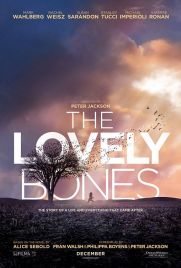
The Lovely Bones (2009)

lovely_bones.jpgThe Lovely Bones was a film I’ve wanted to see since hearing about the book back when. For whatever reason I never got to the theater and then life kind of happened and well, I just never got around to seeing it.
Recently I finally caught up with Peter’s Jackson in-between the Lord of the Rings film. I was well aware of the negativity around it and unfortunately in recent days, political power plays will skew this film’s lasting impression. But I continued on and went in with fair expectations.

The truth is, I really enjoying The Lovely Bones. Sure it has it’s flaws, but none more overpowering of it’s pros, which are vast. You could sit and dissect film all you want, but if you fail to open up and leave yourself vulnerable, you’ve missed the boat entirely. I fear many people have done just that with The Lovely Bones. Here you have truly a tragic incident happening to an innocent girl. A family in intense grieving and so much more meat to chew on for your brain and emotional depth. And the majority of opinions I’ve read is about political agenda and self righteousness.

Look, Im not saying The Lovely Bones is great film. But it provides a unique look into a major moment in all our lives, death. And an exceptional moments of hardship a family goes through involving a death of a loved one. The older I get I appreciate films like this. They challenge and then give. But only if your open to let them.

I’m guilty to have not read the book so I can imagine where the book strives and the film fails (well documented by the critics). But for the life of me, I can’t grasp where all the negativity circulating this movie is coming from. I truly had one of those: “Am I watching the same movie as them moments.”

I guess I can only speak for myself, but count me in as an enjoyer of The Lovely Bones. I was emotionally invested, felt many similarities involving emotions with my own family. And felt supremely sympathetic to what happened to Susie Salmon (like the fish).

I hate doing this, but to get technical for a second, the camerawork was absolutely phenomenal. You can tell Peter Jackson was still in his Lord of the Ring mode. Sweeping landscapes and fluid camera movements where all present. Also Saoirse Ronan was breathtaking. I couldn’t place her at first but she looked super familiar. Afterwords, I realized she starred in “Brooklyn” which was also outstanding.

I’m not implying The Lovely Bones should have won an oscar. But I want to push this on you, where do you draw the line between “good” and enjoyable. For me. this movie was both. But as a movie watcher/lover, if you get to the place where good and enjoyable have to be in unison every single time, I would ask the person next to you to check your pulse.

To be clear, I thought The Lovely Bones was both  good and enjoyable. And I don’t mind saying it.

A Deeper Look into The Darjeeling Limited

About a year ago I posted a video analysis of M. Night Shyamalan’s The Village. A lot of you really enjoyed seeing a fresh take on a film that got slammed by critics for no apparent good reason. So when I came across this yesterday, I wanted to put it up also.

Nerdwriter is slowly becoming my favorite youtube channel. His film analysis are really top notch. Like me, he has a affinity for Wes Anderson. Below is his latest video that explores Anderson’s least successful film; The Darjeeling Limited. Not my favorite but still worthy of a view, TDL is a piece of art just like any Anderson film. I think Nerdwriter hits the nail on the head multiple times during his video and I most certainly thinks its worth a watch if you have any interest in film or Wes Anderson.

Dear Zachary: A Letter to a Son About His Father (2008)

dearzacharyA few days ago my brother-in-law texted me with a film recommendation. His taste usually aligns with mine so my interest was piqued. I was devastated to see what he sent. As my eyes swept the letters, D-E-A-R  Z-A-C…..I stopped. I got the washing machine feeling in my stomach. I was very familiar with Dear Zachary. Lindsey and I watched it on YouTube about a year ago.

I informed him that I indeed already watched the film and sent him a couple of remarks. But after Clayton texted me, I couldn’t and can’t stop thinking about it. I was inspired to write some quick thoughts about Dear Zachery. Because the possibility of others being unaware of this Documentary made me very sad.

You see, Dear Zachary isn’t a film you just write about. It demands reflection and attention. I was left blank. I certainly didn’t want to re-watch, and then it hit me. A perfect first line:

I will never forget Dear Zachary, but I never want to see it again.

I guess anyone that has seen this film will agree with me that going in blind is the only way to fully appreciate the full extent of what director Kuenne has created here. Purely on a cinematic, storytelling level, this film is astounding. It is edited, narrated and structured perfectly. It manages to slowly suck you in and unfolds its story and eventual sentiment behind it so beautifully that you hardly even notice it is happening. It has that rare quality of making time disappear, leaving only you and a story and what it does to you. That, in itself, is a unique and powerful thing. A lost art nowadays.

And then there is the actual story. The reason why this film was made alone is an inspiring sentiment, but the road it leads you down will probably make you feel the broadest spectrum of emotions imaginable. There were pieces where I smiled as if I remembered a dear friend, pieces where I actually wanted to shout at the screen in rage, pieces that made my jaw drop to the floor. And there were pieces where the grief, sadness and emotional despair beat down upon me so relentlessly I could do nothing but cringe and shed a tear with all involved. And the most important reason for all that happening was that it was real, heartfelt and honest. None of what I just typed is an exaggeration.

As sad and angering as most of it was, this is, in the end, one of the most life affirming films I’ve seen in a while. It shows something we often forget we need, that connection to others. I have a personal belief that a worthwhile life and joyful soul resides in the connections we have to other people, to our families and random acts of kindness. And that is something this documentary, through tears of pain and anger, manages to capture with utmost sincerity.

To say Dear Zachary is a must-see would be an understatement. Tragic is a great word to describe Dear Zachary for many reasons. But the greatest misfortune of all would be to miss such a heart wrenching, honest look into the humanity in which we live in. Not to exhaust ourselves over the bad, but to learn to see the good through tragedy.


Once Upon a Time in Anatolia (2011)

Through the night, three cars carry a small group of men around in the rural surroundings of the Anatolian town Keskin, in search of a buried body. The group involves police officers, a doctor, a prosecutor, two grave diggers, army forces, and two brothers, both homicide suspects. The darkness and the seemingly visual indistinctness of the barren landscape do not help, each spot looks the same.

Once Upon a Time in Anatolia is  an uncompromising film, seemingly possessed by some mysterious grandeur in its wintry, bleak and pitch black pessimism. We as an audience are brought along on this sleepless journey in what seems to be just as tiresome as the characters must have felt. We too feel the frustration of the expedition, with every search giving no results. This premise is a genius move from Ceylan, and he has said in interviews that he made the first half as tiresome as he could possibly manage, and if that resulted in people standing up and leaving the cinema, well, then was only a sign of artistic success.

“Never have I ever met someone as pessimistic as you, Doctor”, the Prosecutor says, hinting to the fact that the Doctor believes the young woman the Prosecutor mentioned earlier on may have committed suicide.

The whole film is drenched in this bleak, pessimistic nature, and we come to learn that the main characters – through their view on topics such as family, spouses, ex-wives, death, suicide, hierarchy, bureaucracy, ethics, and their jobs – are all rotten apples with their own set of secrets and demons, no matter their working title. We more or less come to learn that everything and everyone is a cover-up.

In one encapsulating scene of the film theme we see a police officer picking the fruits of an apple tree, and clumsy as he is, he drops a few of them on the ground. What makes this scene so great is what follows. The camera chooses to leave the Prosecutor and the Chief of police in the middle of a debate, and following an apple, rolling down the steps and into a river. From there it floats all the way down until it stops, resting along with three rotten apples, all having followed the same route before… No matter if you’re a cop or a suspected murderer. We’re all bad apples, and we tend to land far from the tree.

I don’t know if this is a good word to describe this film, but the word “literate” comes to mind. In many ways Ceylan’s film is like a good novel, with deep and carefully drawn out characters and setting, and with a complex story, where the truth seem to be buried under ground as well, hidden in the dark, indistinct landscapes. Ceylan effectively combines the literate quality of the script with some masterful cinematography, mostly done with natural lighting (the light from the cars). The visuals give the film something of an ethereal quality, which works extremely well for the journey aspect of the narrative. Basically, this is one of those films that’s so moody we tend to call them experiences rather than movies. I can’t recall having seen anything like this before.

In the end you come out of the film feeling fatigued, but also that your intelligence and sharp senses have been challenged. You know that a meaningful, mysterious slice of life just has been presented to you, but  you’ll have to figure out what it all means on your own.